

Circular Tech by Default: A Whole Life-Cycle IT Strategy
Global electronic waste (e-waste) generation continues to outpace formal collection and recycling efforts by a factor of five, with the UK generating nearly 24 kg per capita annually against an EU average of 17.6 kg (UNITAR e-waste monitor, 2024). While enterprise IT hardware has historically been scrutinised through the lens of operational energy efficiency, Scope 3 embodied emissions dominate device life-cycle impacts. Published Life Cycle Assessments (LCAs) suggest that a typical business-grade laptop accounts for roughly 300 to 350+ kgCO₂e across its lifespan; with up to 75–80% generated during extraction and manufacturing, alongside significant critical raw material dependencies. While recent manufacturer Product Carbon Footprints (PCFs) reflect modest declines in baseline embodied carbon due to cleaner grids and efficiency gains, the manufacturing phase remains the single largest environmental hotspot for end-user computing.
Modern enterprise IT is not entirely linear; leading corporate and public sector organisations have long practised in-situ asset sweating, component triage (e.g., memory reseating, battery swaps), and internal redeployment. However, fleet-wide decisions are still frequently constrained by rigid procurement cycles, OEM software deprecation, fragmented telemetry, and subjective assessments of second-life equipment.
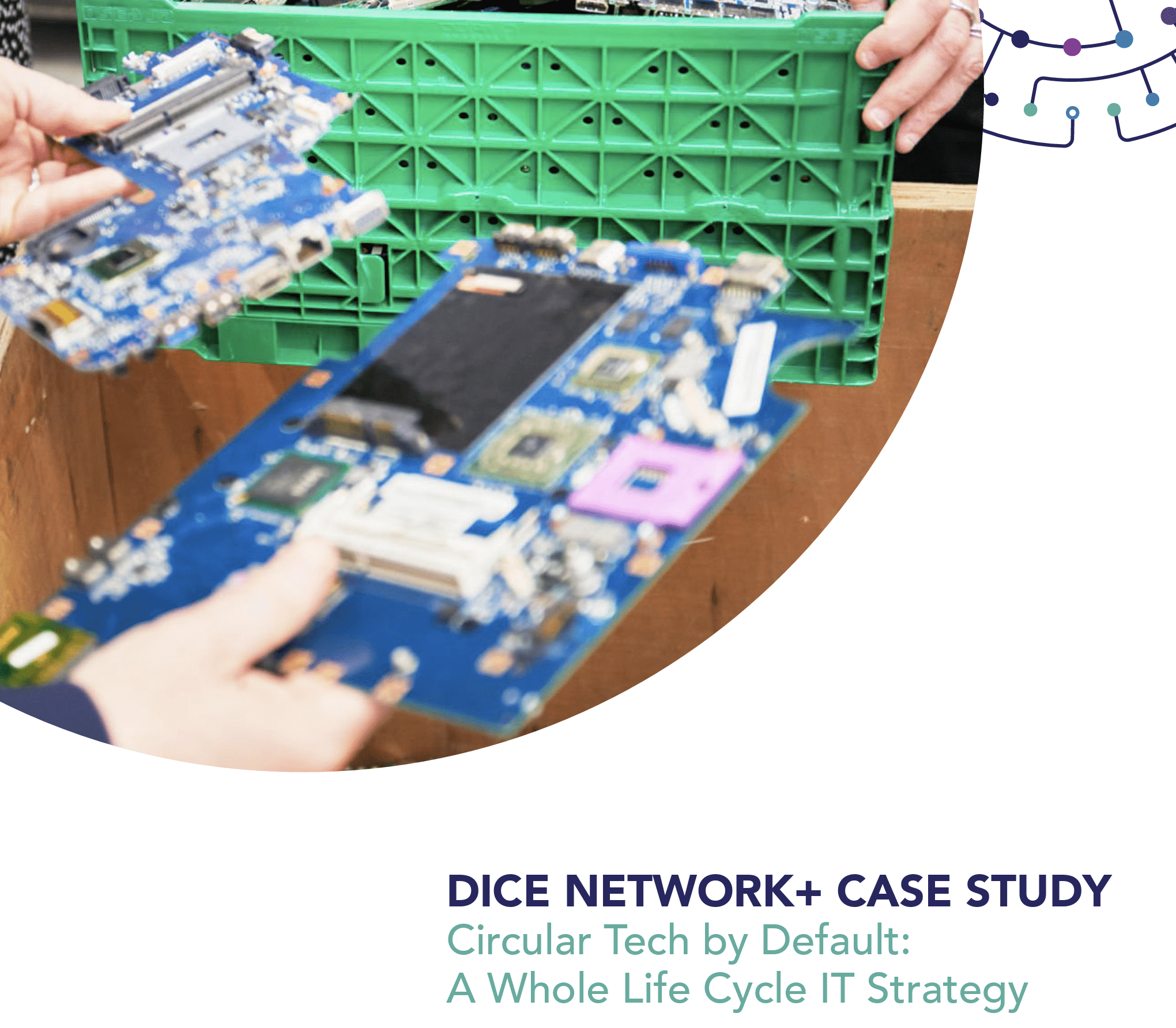
Insight Report: Circular Tech by Default - A Whole Life-Cycle IT Strategy
This case study synthesises cross-sector case examples to outline an enterprise Whole Life-Cycle Approach (WLCA). Organised around the DICE Network+ enabling levers; Design for Circularity, Operate for Maximum Value Recovery, and Collaborate for Systemic Change, this framework demonstrates how integrating driverless telemetry, workload-matched device profiling, and certified remanufacturing allows organisations to move beyond arbitrary refresh schedules toward an evidence-based “Circular Tech by Default” operating model.
>>Download the case study