

Building Circular, Resilient Digital Infrastructure: Highlights from the DCA 10x10 Event
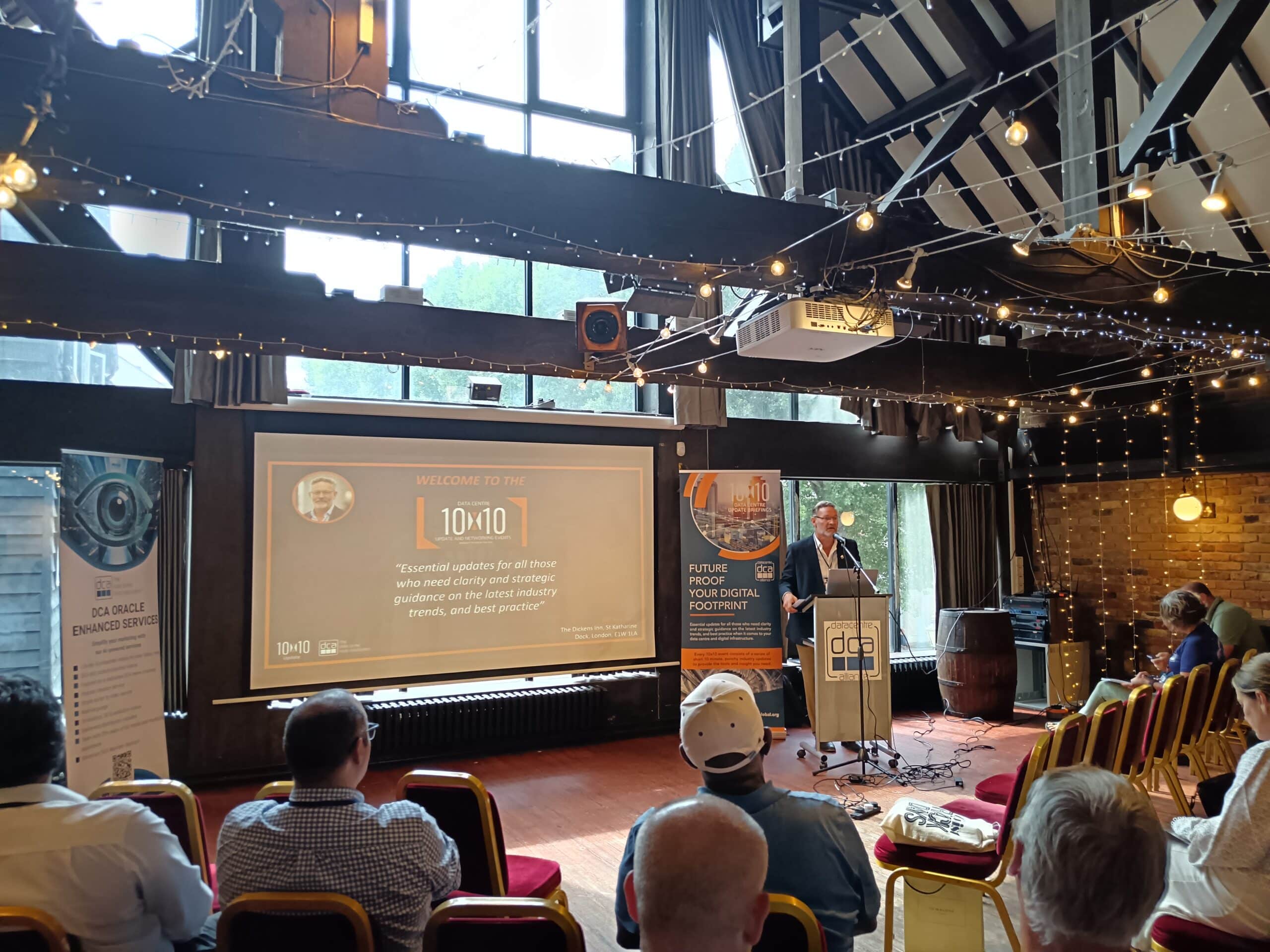
As part of our ongoing work, our Research and Impact Fellow Diego Bermudez, participated in the Data Centre Alliance (DCA) 10×10 event, a rapid-fire session where industry leaders shared ten-minute presentations on the future of data centre infrastructure.
During the event, Diego introduced the Data Centre Infrastructure Circularity Blueprint to the DCA members, showcasing how circular economy principles can support more resilient, resource-efficient and future-ready digital infrastructure.
Bringing together representatives from industry, academia and government, the event explored the opportunities and challenges facing the sector as demand for AI and digital infrastructure continues to grow. Discussions focused on how systems thinking, circular economy principles and cross-sector collaboration can support the transition towards more sustainable data centres.
Key Takeaways:
Throughout the event, speakers explored how circularity can be embedded across the data centre lifecycle, from planning and design through to operation and end-of-life management.
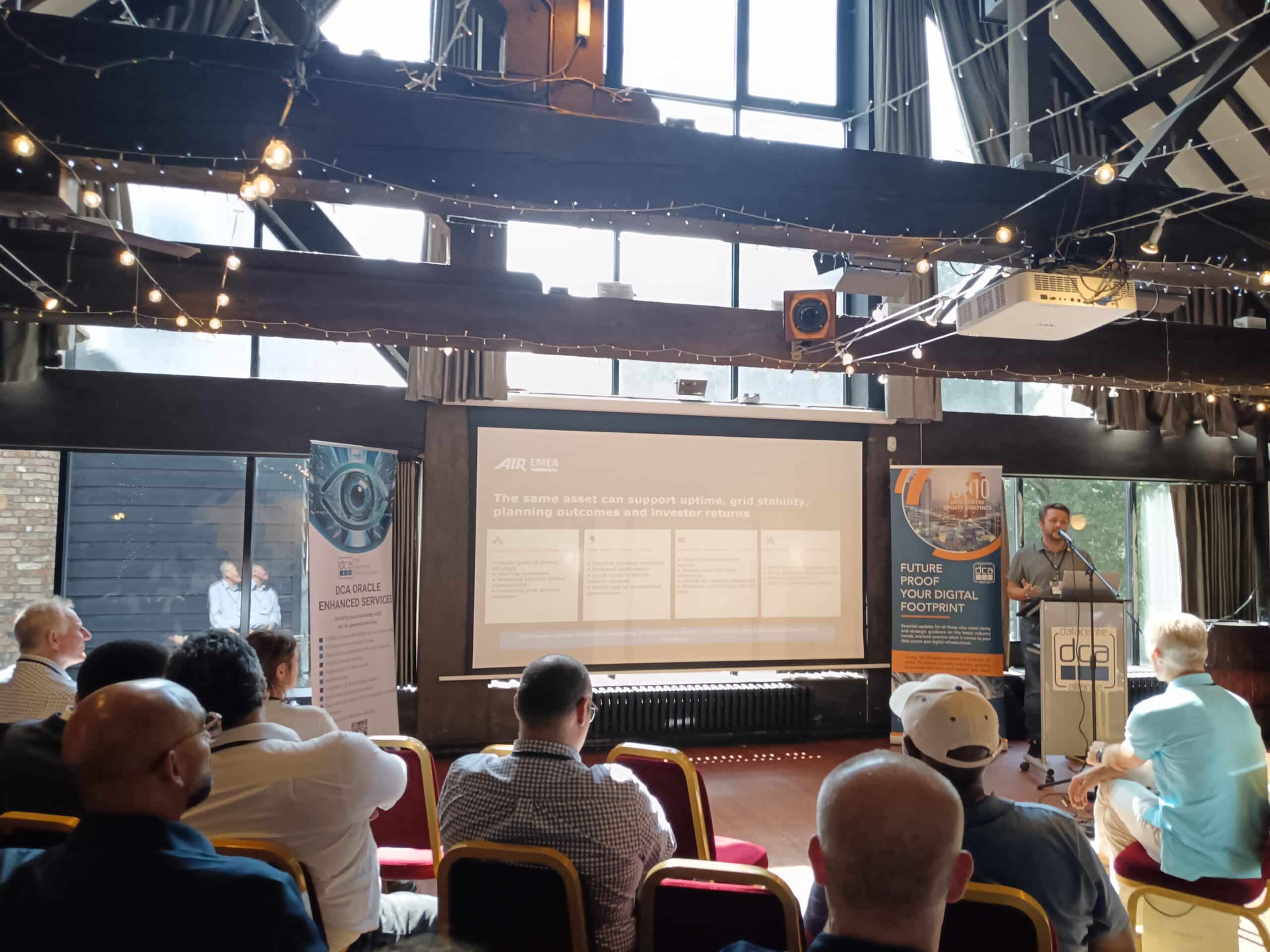
- From Standalone Assets to Integrated Networks: Keith MacLean-Martin from Piller highlighted a critical shift; data centres can no longer operate as isolated assets. They must function as an integrated network to distribute energy and material demand, supporting broader grid stability and avoiding inefficiencies during grid fluctuations.
- Unlocking Permitting Bottlenecks through Retrofitting: Venessa Moffat shared a stark industry reality: 5 GW of capacity is currently pending planning or permitting, while only 297 MW is under construction. Taking a systems approach to sustainably expand facilities and improve wider communications and energy infrastructure is essential from a planning and permitting perspective.
- Frontier AI & Data Centres as Community Assets: Phil Briscoe from SECNewgate noted how the expansion of Frontier AI demands a distributed approach to reduce latency. To succeed, data centres must be viewed as community assets centred on Resilience, Relevance, and Reward.
- Closing the Value Chain Knowledge Gap: Liam Round from Teksan emphasised the need for education across all stakeholders; from communities and local authorities to operators and funders, alongside upcoming advisory guidance on Design for Longevity, Component-Level Circularity, and End-of-Life Logistics to eliminate unintended e-waste dumping.
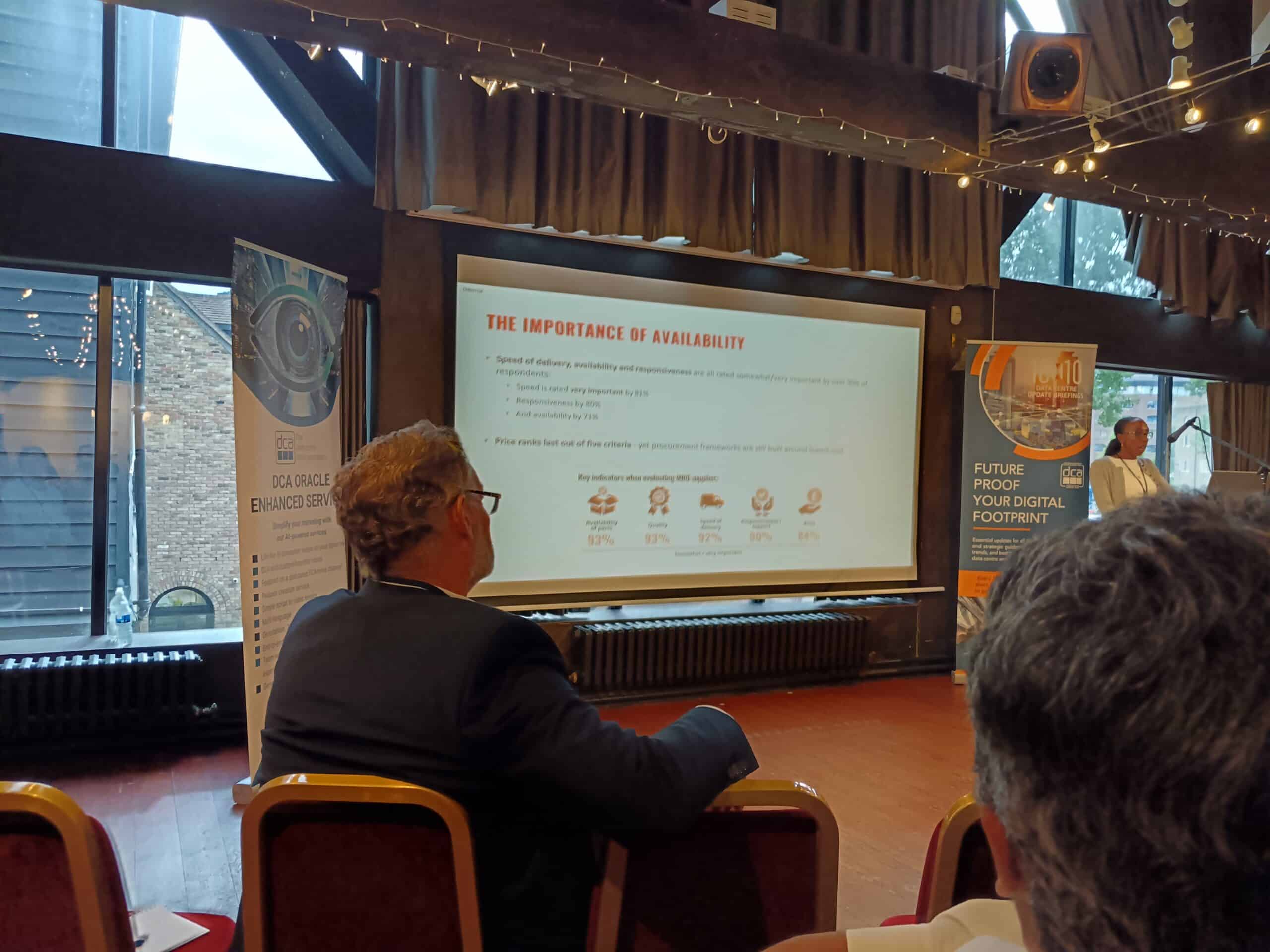
- Smarter Asset Management & Digital Twins: Upgrading from “systems of record” to “systems of intelligence” through asset grading and digital twins enables circular Maintenance, Repair, and Operations (MRO). This improves Service Level Agreements (SLAs), lowers operational expenditure and Total Cost of Ownership (TCO), and keeps existing components in the loop longer.
- Next-Gen Energy & Cooling Dynamics: With compute accounting for 50–60% of data centre energy consumption and cooling taking up ~40%, high-density GPU demands require flexible energy models, on-site renewables, and waste heat recovery.
Looking Ahead:
The event emphasised that achieving operational excellence and maintaining a social licence to operate will require smarter, more circular approaches across the entire data centre lifecycle. Extending asset life, reducing carbon emissions and improving resource efficiency will depend on better data, stronger collaboration and wider systems thinking.
The DICE Network+ will continue contributing to these conversations through its research, partnerships and the Data Centre Infrastructure Circularity Blueprint, helping to bridge academia, industry and government in developing more circular and resilient digital infrastructure.