

Knowledge Exchange Placement Spotlight: Citizen Science
In conversation with Bach Nguyen, University of Exeter
Placement: Bridging Local Wisdom and Scientific Innovation: A Citizen Science Approach to Climate Resilience in the Mekong Delta (Vietnam)
Date & duration: April – June 2026, 3 months
Q1. For readers new to the project, tell us about the challenge you set out to address and what inspired this placement.
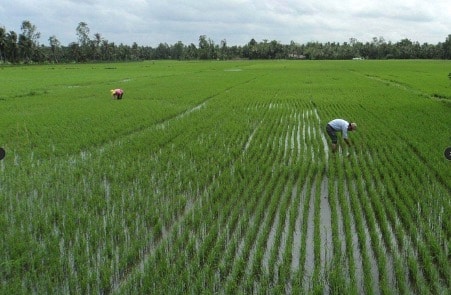
In the Mekong Delta of Vietnam, farmers are facing some serious hurdles due to climate change. They are dealing with highly unpredictable weather, extreme temperature shifts, and saltwater intrusion, which have all led to a surge in complex pests and crop diseases. On top of that, top-down government interventions often miss the mark because they are largely reactive and aren’t tailored to specific local conditions.
What inspired this placement was the realization that local farmers hold incredibly valuable, generations-deep indigenous knowledge and practical climate adaptation strategies. Unfortunately, this wisdom is often fragmented and completely left out of formal scientific research. We wanted to bridge this gap between local, on-the-ground experience and formal scientific innovation.
To address this, we set out to co-design a digital citizen-science platform to bring these two worlds together. By integrating local farmers’ practical insights with scientific models, and tackling coordination challenges using emerging tech like AI, we aimed to deliver personalized, bottom-up climate adaptation advice. Ultimately, this project was inspired by the drive to empower rural communities, helping them build resilience and improve productivity in the face of harsh environmental realities.
Q2. How does this research contribute to a digitally enabled circular economy?
This research directly contributes to a digitally enabled circular economy by using technology to make agriculture more resource-efficient, sustainable, and resilient. Through the proposed citizen-science platform, the project captures the valuable, on-the-ground knowledge of local farmers and integrates it with formal scientific evidence. This creates a continuous feedback loop where practical, tailored climate-adaptation guidance is redistributed right back to the community.
By functioning this way, the platform helps farmers optimize their everyday practices. It provides actionable advice that allows them to cut down on wasted inputs like water, fertilizers, and pesticides, which are key steps in promoting agricultural circularity. Also, by helping farmers adapt to extreme weather and novel diseases before their crops or livestock fail, the digital tool directly reduces production waste and income instability.
Q3. What surprised you most when working directly with farmers and communities on the ground?
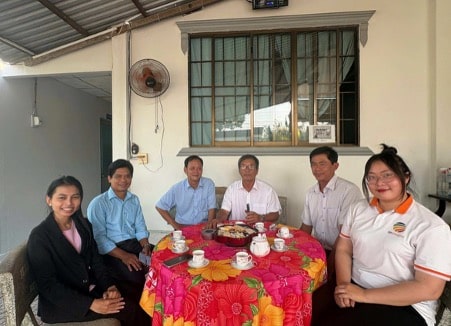
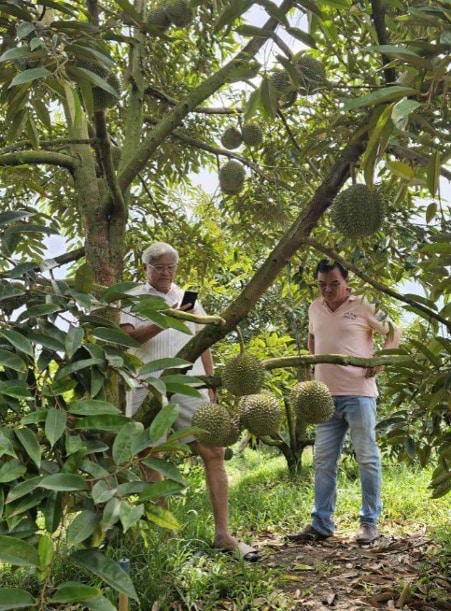
What surprised me most when working on the ground was how heavily farmers lean on their own indigenous knowledge rather than formal scientific advice. I didn’t expect such a strong feeling that scientific theory is often out of touch with local realities.
Farmers frequently expressed that agricultural engineers and scientists rely too much on books and generalized theories that simply don’t translate to their specific, hyper-local soil and weather conditions. It was eye-opening to see some farmers flat-out refuse to follow extension officers’ instructions, finding their methods impractical or too risky for real-world application. They truly believe practical experience comes from working the land, not from studying a lesson plan.
Another major surprise was their healthy skepticism toward commercial “experts.” They know local pesticide dealers often push a “big pile” of unnecessary chemicals just to boost their sales. Because farmers bear the financial risk, they trust their own daily observations and the shared wisdom of fellow farmers. It was fascinating to see how they view scientific knowledge with caution, letting their hands-on intuition actually protect their livelihoods.
Q4. The placement appears to have created opportunities well beyond its original scope. What additional impacts have emerged?
We originally designed this placement with a specific, regional focus: conducting interviews with around 20 farmers in the Mekong Delta to pilot a citizen-science platform. However, the outcomes have grown well beyond that initial scope into a robust, nationwide initiative.
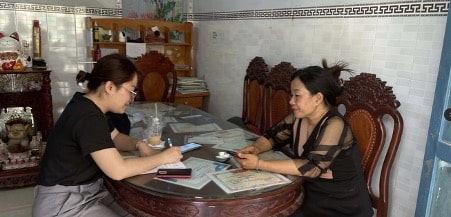
What’s really exciting is that we secured additional funding from National Cheng Kung University (NCKU) in Taiwan. This allowed us to expand our research geographically, moving beyond just the Mekong Delta to collect data across Northern, Central, and Southern Vietnam. We also ended up interviewing 26 farming households instead of our original target, generating deeper insights that are already shaping a nationwide survey.
At the institutional level, the partnership between the University of Exeter and UEH University has evolved into a formal joint environmental research group. UEH has actually committed to support this collaboration, and we are now exploring sandwich programs and researcher exchanges. Finally, we have leveraged this momentum and submitted larger external funding applications, including a proposal for the British Academy. What started as a focused local pilot has essentially laid the groundwork for a long-term, internationally funded research program.
Q5. What happens next, and where do you see this work leading?
We are currently rolling out a large-scale survey across Northern, Central, and Southern Vietnam, backed by new funding from National Cheng Kung University (NCKU) in Taiwan. This exciting partnership also gives us a fantastic opportunity to eventually scale our research and digital tools beyond Vietnam.
On the academic front, we are preparing to submit an article to Regional Studies. Also, we are teaming up with AI and computer science collaborators in Thailand to fully build out and refine the citizen-science platform. Ultimately, our long-term vision for real-world impact is to get this app directly into the hands of rural communities. By providing a highly localized digital tool, we hope to help farmers reduce production risks, cut down on input waste, and secure more stable livelihoods in the face of climate change.
Q6. How has the placement influenced your own development as a researcher, and what would you say to others considering a Knowledge Exchange Placement?
This placement has profoundly shaped my identity as a boundary-spanning researcher. By working directly with farming communities and academics in Vietnam, I developed new capabilities in qualitative interviewing, stakeholder engagement, and translating raw field data into mixed-methods research designs.
The experience highlighted the massive value of cross-cultural and interdisciplinary working. Bridging management, environmental economics, and agricultural science forced me to step outside my academic silo, ultimately leading to a deeper appreciation for bidirectional knowledge exchange. I realized that effective climate adaptation isn’t just about transferring top-down science; it’s about integrating it with place-based, traditional experience. Moreover, coordinating this fieldwork and establishing a new joint environmental research group between the University of Exeter and UEH really sharpened my partnership-building and grant-development skills.
To anyone considering a Knowledge Exchange Placement, my biggest advice is to absolutely go for it! The mobility and face-to-face engagement are completely irreplaceable. Being on the ground, conducting ethnographic observations, and talking directly with local stakeholders will give you nuanced, practical insights that you simply can’t get from behind a desk. It’s a fantastic accelerator for both your academic career and your real-world impact.