
Scaling Circular Hardware: Lessons from the S3 Semiconductor Ecosystem
The microelectronics industry faces immense resource intensity, requiring high volumes of water, energy, and critical raw materials (CRM) alongside complex chemical processes. Scaling sustainable innovations in high-volume chip manufacturing is notoriously difficult; extreme technical barriers to entry and corporate “technology islands” often stall early-stage breakthroughs.
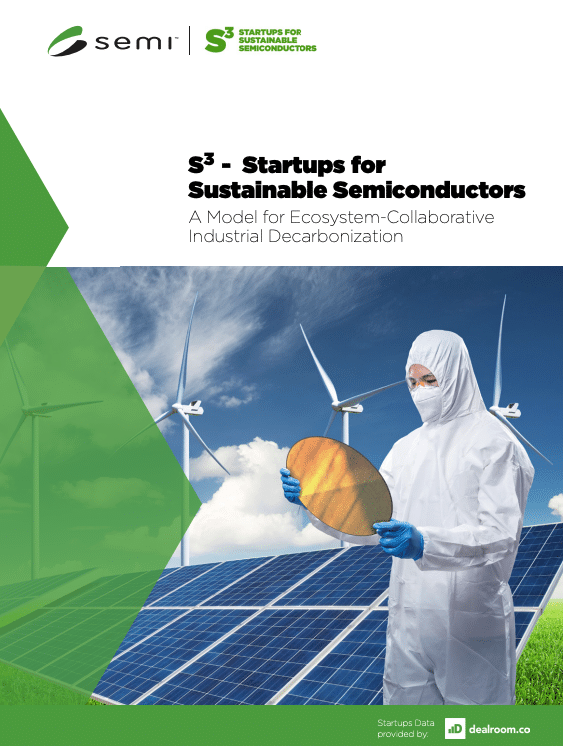
To overcome this, the Startups for Sustainable Semiconductors (S3) program; managed by SEMI alongside corporate venture capital (CVC) leaders including Applied Ventures, ASML, Intel Capital, and Micron Ventures, offers a powerful blueprint for ecosystem-led industrial decarbonisation.
An Ecosystem Approach to Industrial Innovation
An Ecosystem Approach to Industrial Innovation
Rather than requiring startups to navigate fragmented hardware supply chains independently, S3 unites major industry players to evaluate and mentor emerging climate tech companies. By providing direct access to technical subject matter experts, pilot testing environments, and pooled CVC capital, the program bridges the gap between venture innovation and legacy manufacturing.
This pre-competitive, collaborative structure delivers results: startups selected for internal expert assessments achieve a 17% conversion rate to scaled customer deployments, significantly outperforming traditional early-stage venture success rates.
Driving Circular Economy Solutions in Microelectronics
The S3 initiative places circularity at the core of its technical focus areas across several critical domains:
- Water Circularity & Recovery: Advancing in-situ separation technologies, digital water management platforms, and drop-in membrane efficiency to enable 100% water recapture and closed-loop reuse within fabrication facilities.
- CRMs & Chemical Loops: Eliminating hazardous materials; such as per- and polyfluoroalkyl substances (PFAS), while developing recycling and other upstream pathways for critical metals, hydrogen, and process chemicals.
- AI & Design for Circularity: Leveraging generative AI and digital tools to accelerate sustainable material discovery, reduce process-level waste streams, and optimise energy efficiency across both manufacturing fabs and downstream data centre infrastructure.
Opportunities for DICE Network+ Members
For the DICE Network+ community, the S3 model illustrates how pre-competitive collaboration can unlock systemic circularity in complex hardware value chains and provides key learnings from the programme. This aligns directly with our network priorities around digital infrastructure, material recovery, and sustainable tech ecosystems.
We invite our network members; including researchers, innovators, and industry leaders, to engage with these global frameworks:
- Explore Cross-Sector Partnerships: Connect with cross-industry platforms to pilot circular technologies and translate research into high-impact industrial applications.
- Inform Upcoming Workstreams: Utilise these ecosystem insights to inform circular design strategies across our ongoing digital infrastructure research agendas: Data centres and Advanced Connective Technologies (ACT) (Upcoming).
To learn more about participating in or aligning with circular tech ecosystem initiatives, visit the DICE Network+ website.